
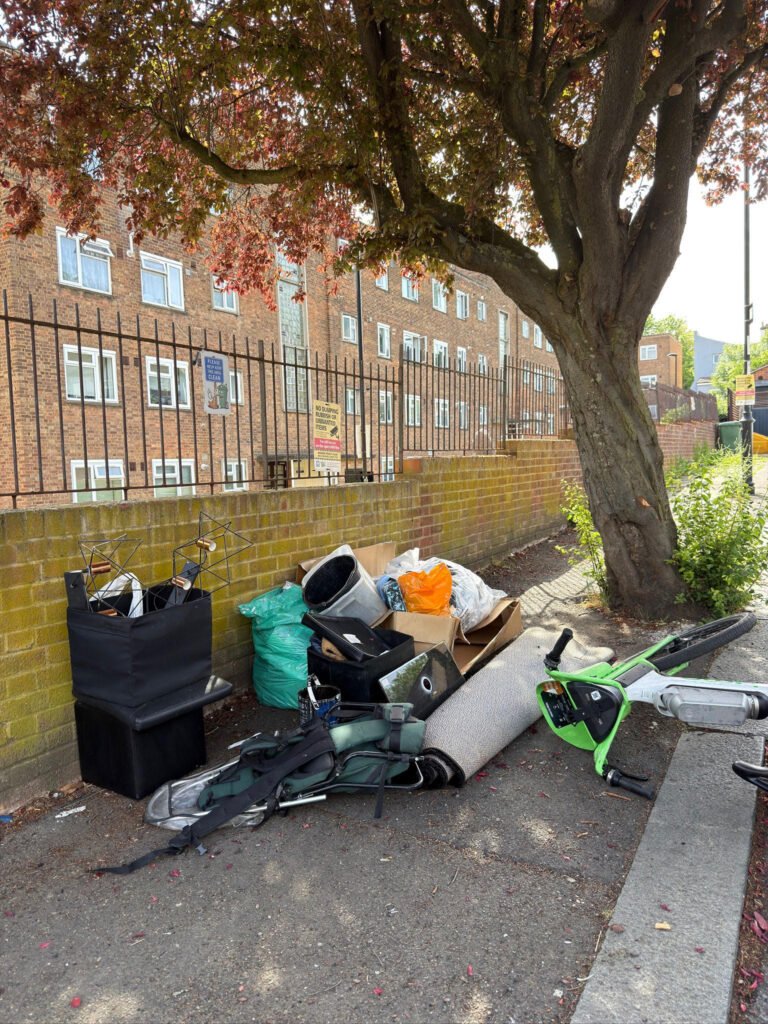
Lewisham Council has announced a renewed crackdown on fly-tippers using a major data-driven mobilisation of its CCTV network.
The council said it would be using 27 mobile CCTV cameras, placing them in the worst local hotspots based on reports collected from the community. The council has a total of 184 cameras across the borough.
Corin Ashwell, cabinet member for the environment, nature, transport and climate action, said officers would use real-time resident data to decide exactly where the mobile cameras should go. “There would be no more quess work.”
He warned fly-tippers that these cameras would be able to identify vehicles, trace registrations, and instantly issue fines to registered owners.
These cameras would be routinely moved between known high-harm hotspots based on data intelligence – residents’ reports
The renewed crackdown was designed to back up physical cleanup crews with real, legally binding enforcement.
The council urged all residents to actively feed information into the Love Clean Streets Reporting Portal so it could continue moving mobile cameras to the most active fly-tipping zones.
Lewisham says Fly-tipping costs it more than £1 million every year – money that could be spent on the services we all rely on. It was faced with 43,000 reported incidents between mid-2025 and mid -2026
Alongside its strategy of surveillance, the council will also implement severe penalties, and rapid-response clearing.
Lewisham increased the Fixed Penalty Notice (FPN) for fly-tipping from £400 to a maximum of £1,000 per offence.
For severe or commercial waste dumping, the Environmental Enforcement Team pursues formal court action.
A recent successful prosecution against an illegal business dump in New Cross resulted in £4,600 in fines and legal costs.
In persistent hotspots like Whitefoot Lane (which yielded nearly 50 fines), the council conducts joint vehicle stop-and-search operations with the Metropolitan Police to intercept unlicenced waste carriers.
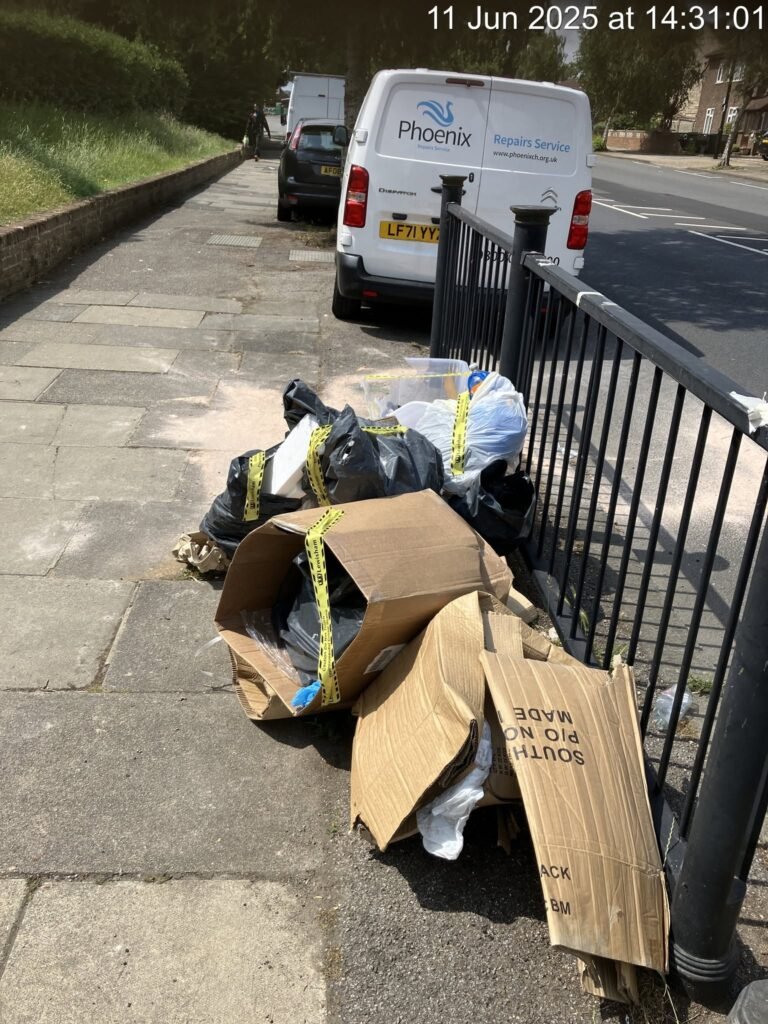
Enforcement officers wrap investigated fly-tips in bright yellow tape to signal to the community that evidence is being gathered, serving as a visual deterrent to repeat offenders.
The council removed the financial incentive for fly-tipping late last year. It slashed its bulky waste collection fee from a flat £42 down to just £5 per item (including bulky items like mattresses), making it one of the cheapest collection services in London.
This measure alone generated a 91 per cent surge in legitimate collection bookings.
The council has also provided small grants to residents to help reclaim unloved, frequent fly-tipping spots and convert them into community gardens.