
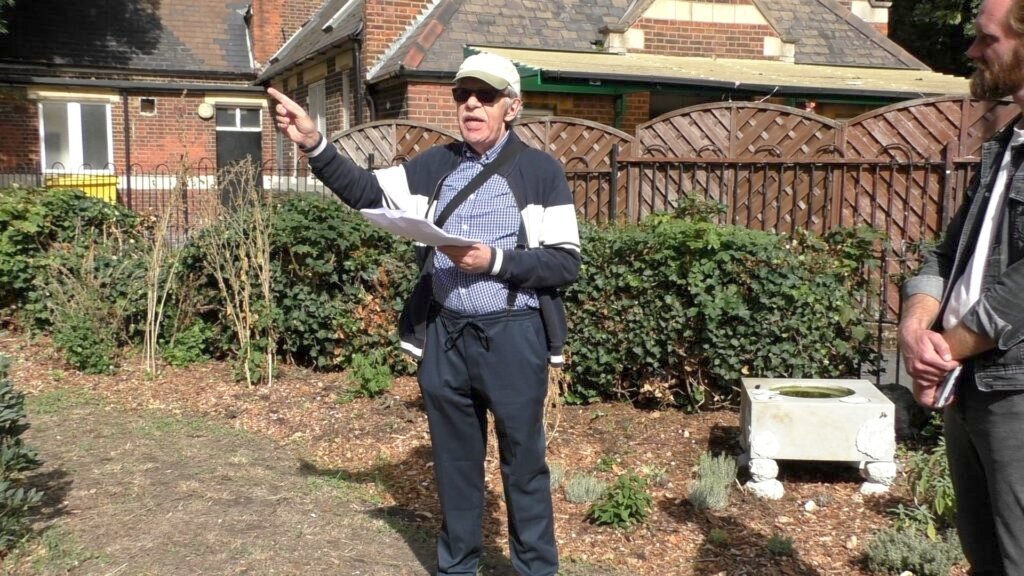
The herbalist garden created by David Congram and Joao Afonso was inspired by the history and mystery of the Lady Well. Here we print a short speech by Robert Smith, the author of two books on Ladywell, at the grand openmg of the garden
“It is a great pleasure to be here today for the official opening of the Ladywell Physic Garden.
I have been asked to say a few words about the history which inspired this remarkable garden, and particularly about my own research into the Lady Well and the Ladywell Mineral Spring.
I suppose I should begin by saying that I have had something of an obsession with the Lady Well for rather a long time!
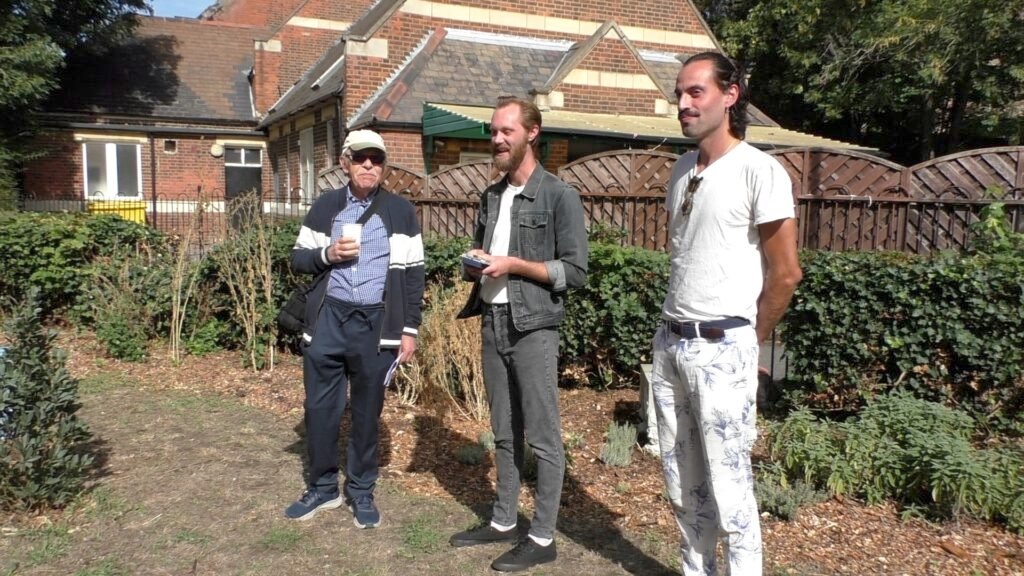
My first book on the subject, The Well of Our Lady, was published in 1986. More recently, I published A Tale of Two Villages, which has much more information about the Well, it’s history and the various mysteries.
It was particularly gratifying to discover that David had read both books — and had even managed to acquire a first edition of The Well of Our Lady!
David and Joao have taken the history they found in those books and transformed it into something quite extraordinary: a living garden. The story behind Ladywell is a fascinating one.
According to the historical evidence, the story of Ladywell Village began in the fifteent century. In the summer of 1472, water suddenly emerged from the ground over there – quite unexpectedly and, to people at the time it seemed miraculous.
This became the Lady Well. It was on the outskirts of the original Lewisham Village, which was centred on St. Mary’s
Church. The Well became associated with St Mary, or Our Lady, hence “The Well of Our Lady”. Ultimately it became the Lady Well and gave our village it’s name.
And that makes the position of this garden particularly appropriate. We are standing in a garden which has been installed between the site of the historic
Lady Well and St Mary’s Church — the very church from which the Well and our village took their name.
For those who are interested in such things, the garden is also beside this ancient track — the Ladywell Ley — and sits above both the primary and secondary aquifers.
But there is another part of the story. The Ladywell Mineral Spring was a different source of water, and it acquired its own
reputation for its health-giving properties. In particular, people came here to take the waters for problems with their eyes.
That is why I find what David and Joao have created here so interesting.
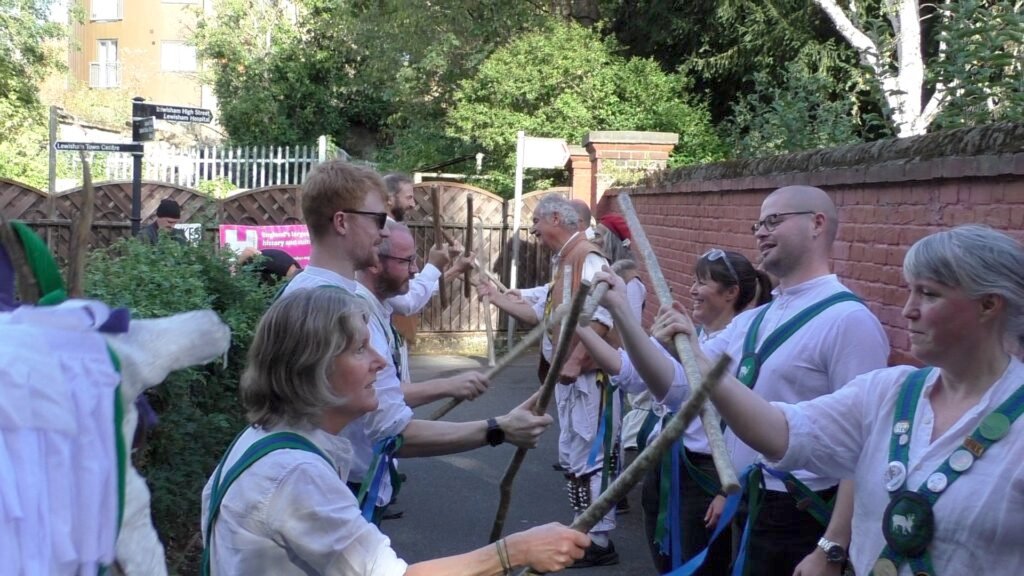
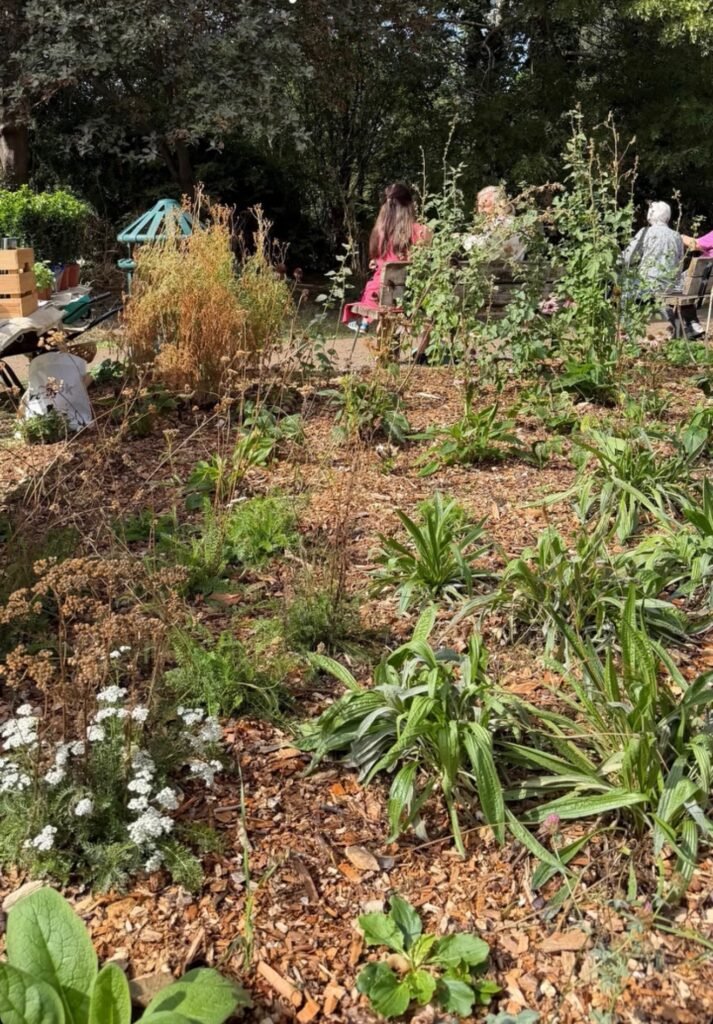
This is not simply a pretty garden with a historical theme attached to it. It is a physic garden — a garden of medicinal plants — the plants chosen have connections with traditional herbal medicine. Some of them also have a particular relevance to the
Mineral Spring and its association with eye problems.
There are wonderful little touches which connect the garden with its history: the old well buckets which have been given a new life as planters, and the water represented by the beautiful central birdbath.
And I am particularly pleased that David and Joao have included plants which can actually be found growing locally, including plants from Ladywell Fields. So the garden connects not just with the history of Ladywell, but with the landscape around us today.
What David and Joao have achieved is something I think historians should always hope for. They have taken history out of the pages of a book and brought it back into the community.
When I first met them and realised how fascinated they were by the story of the Lady Well and the Mineral Spring, I was delighted to see what they were planning. Their enthusiasm has been infectious, and their garden has already taken the story of Ladywell far beyond our own community through its appearance at the RHS Sandringham Flower Show and it received the prestigious Silver Gilt!
Today the garden has come home.
It is now here, in Ladywell Village, close to the places which inspired it. And I hope that people who come here will enjoy it simply as a beautiful garden. But I also hope that some will stop and wonder why it is here — why this place is called
Ladywell, where the Lady Well actually was, why water suddenly appeared here in 1472, and what became of both the Well and the Mineral Spring.
Perhaps that curiosity will encourage people to discover more about the extraordinary history of the village and the landscape.
David and Joao have given us something very special: a garden which celebrates plants, water, history and community, all in one small but very meaningful place. I am enormously grateful to them for bringing this story to life, and I am delighted that
the Ladywell Physic Garden has found its permanent home here, between the Well and the church which gave our village its name.
So, David and Joao, thank you — and congratulations. And to everyone who will enjoy this garden in the years ahead, I hope it will give you not only pleasure, but perhaps a little curiosity about the remarkable story of Ladywell.”