
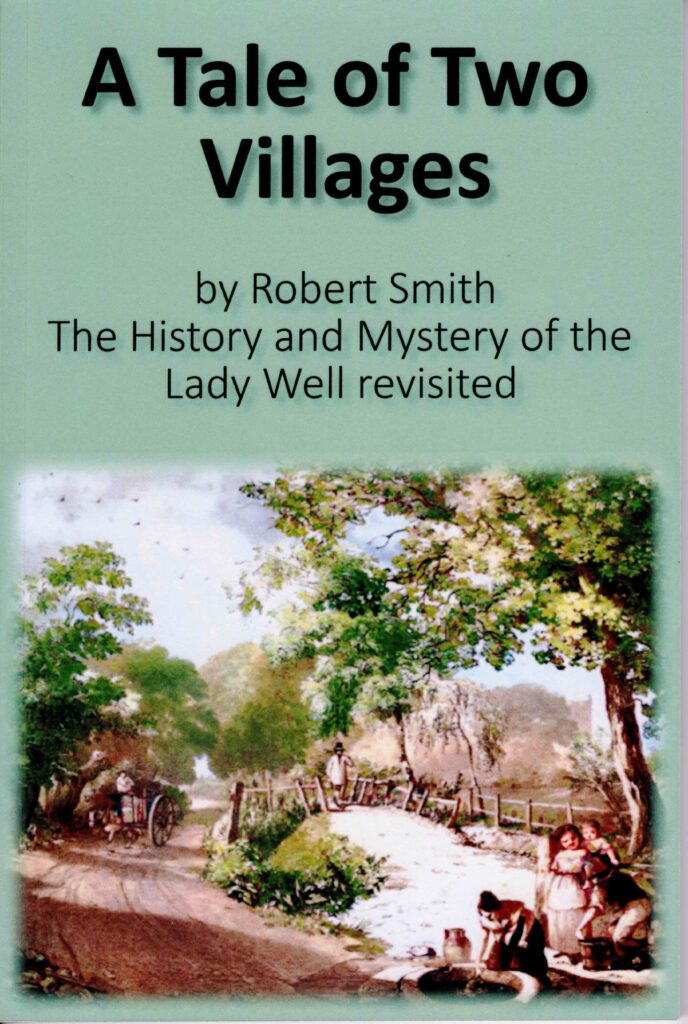
Robert Smith, who founded the Ladywell Society in 1984, has carried out years of research into the Lady Well which gave this neighbourhood its name. Julian Watson reviews Robert’s second book on the history of the well and why it disappeared.
Robert’s new book ‘A Tale of Two Villages‘ is most welcome: the result of extensive and thorough research since his original book ‘The Well of Our Lady’ in 1986.
Our Ladywell community takes its name from the important well or spring that stood in Ladywell Road (formerly Brockley Lane and, earlier, Vicarage Lane).
In 1472 it suddenly gushed forth in a spectacular and ominous way, earning itself a place in Warkworth’s
Chronicles.
By 1855 the well had dried up or been capped off – Robert tells the sad story in great detail.
The exact site of the well under Ladywell Bridge is known but there is no physical evidence of it. The mineral spring further along Ladywell Road is also researched and explained.
Since 1986, Robert has continued to research the Ladywell and also the mysterious and undocumented dry well in the crypt of St Mary the Virgin Church, the ancient parish church of Lewisham.
An excavation of that remarkable feature is needed to understand its date and purpose.
Robert has discovered and researched many hitherto unknown documents about the Ladywell, but one map discovery at the London Archives is astonishing.
A large coloured drainage plan of Lewisham prepared in 1852 prior to the construction of a sewer shows Lewisham, Ladywell and Catford as a remarkable wetland.
All water bodies are shown: the Ravensbourne and its branches, the Honor Oak Stream, the picturesque High Street Stream
flanked by elm trees and several ponds.
Our thanks to Robert for producing his well-researched and most readable book.
A Tale of Two Villages can be ordered on Amazon. Price £10.00