
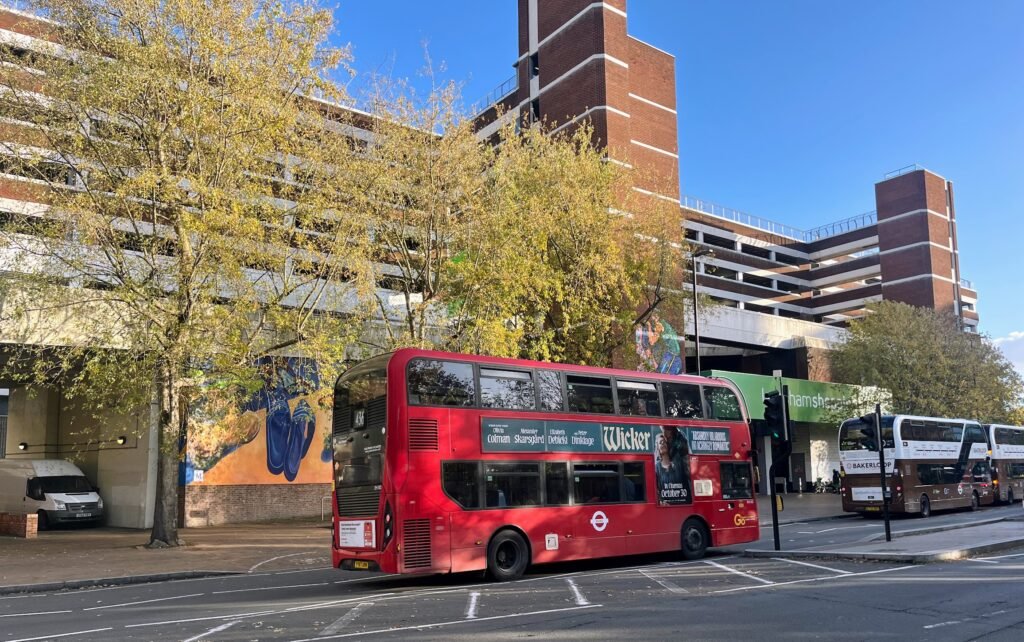
Cllr Daniel Dream, cabinet member for Inclusive Regeneration, Planning and Housing Delivery, argues cost pressures were the decisive factor in Landsec’s decision to pause the Lewisham shopping centre redevelopment
I live in Catford, and like many residents I was disappointed to hear that Landsec has deprioritised its plans for Lewisham Shopping Centre. I know a lot of people wanted to see it go ahead, with or without adjustments. Others campaigned hard against any of it happening. Both groups deserve the same facts.
As Cabinet Lead for Inclusive Regeneration, Planning and Housing Delivery, in recent months I have been in separate meetings with Landsec and with LHN1, the leaseholder of Lewisham House, the old Citibank tower at the centre of this story. Separately, in my career in architecture, I have worked on international regeneration schemes far larger than this one, so I know how much has to line up for projects like this to happen.
I am writing this personally, and the views here are my own.
I would rather trade in facts than party lines and press releases. Every figure I quote comes from public documents or published reports that anyone can read, most of them through the planning application and the council’s meeting papers. They are listed at the end.
I’m not particularly tribal when it comes to politics, and I often meet people working in housing from both the Labour and Conservative Parties, and in those conversations political baggage is normally left at the door. That is not the case with Lewisham Labour, who are treating this situation as a political opportunity and, in my view, giving a misleading picture of it. So here is what the record shows.
Any valid conversation on the stalling of the project needs to address the fact that Landsec’s statement leads with interest rates, construction costs and regulation issues. Construction in London is on a precipice, pushed there by those same pressures.
Landsec was not alone. This month Taylor Wimpey said it would not start any new developments in London, calling the economics of building in the capital fundamentally broken. In the days after Landsec’s decision, reports said the next phase of the Canada Water development had been shelved. Arguably that is the bigger story. The whole scheme is more than double Lewisham’s £1.5bn, and parts of the site, including its cinema and bowling alley, had already been closed to make way for the work. That is not the case in Lewisham, where the shopping centre remains open.
Where Landsec’s statement addresses the council’s position, it refers to “recent statements” and not a decision, a refusal or a vote. Any company pausing a scheme that already has planning permission has to explain it to its investors and will set out every consideration that applies. The council’s position was one of them, which I will return to in the second part of this article, but in my view the numbers were the larger pressure. Lewisham Labour say Landsec walked away because of the Mayor’s comments on the need for social rent. That is incomplete, and I do not think it survives scrutiny. Such claims are partial and opportunistic.
Every big scheme like this has to show its sums: what it will cost to build, what it will earn and whether that leaves a reasonable profit. Here, the sums never added up, and they are all on the public record. Before a single brick was moved, Landsec’s own consultants, Quod, reported in June 2025 that the scheme would lose £527m. The council’s independent assessors, BNP Paribas, put the loss at £492m.
In a report dated 25 July 2025, three months before councillors approved it, City Hall’s own experts, working under Labour Mayor Sadiq Khan, checked the figures. They concluded the scheme was “not deliverable, even with optimistic growth assumptions applied”. They also questioned if the design was making “suboptimal” use of the space, which may have been holding back the number of affordable homes the site could provide. Fifteen months later, Landsec has put the scheme on hold.
Even the most hopeful forecast, with property values rising faster than inflation every year and building costs cut by a tenth, produced a profit below Landsec’s own target.
The scheme has often been described as coming at no cost to the taxpayer. But housing affects us all, and the shortage already has a cost. Temporary accommodation for families in Lewisham costs around £90m a year in total, and the council has to find a substantial share of that from its own budget. When residents email me about a bin that has not been replaced or a fly tip left on the pavement, they are experiencing a council that cannot fund everything properly because of the pressure housing puts on its budget.
So the type of homes built matters. The rents used to test this scheme put a studio at £1,650 a month, a one-bedroom flat at £2,050, a two-bedroom flat at £2,450 and a three-bedroom flat at £3,600. That last figure is over £43,000 a year. For the two larger flats, Landsec’s consultants had advised lower rents, and the assessors raised them to these levels. Both still found a loss of around half a billion pounds when considered against the cost. The assessors then tested how much prices would have to grow for the scheme to make a profit. Put simply, on the assessors’ tests the scheme only made a profit, and still below what a developer would normally need, if prices rose by 8% a year while building costs rose 2%. If rents rose in step with those prices, a three-bedroom flat would go from £3,600 a month to about £5,300 after five years. In a market that is already struggling, that kind of growth is hard to imagine.
By most measures, I’m doing well. I have a PhD, have taught at what is often ranked the best school of architecture in the world and have a mortgage on the home I share with my partner and two kids, taken out when rates spiked after Liz Truss’s infamous mini budget. Even at that high rate, my monthly payments are much lower than the £3,600 a month used to test a three-bedroom flat in this scheme, and I would be unable to pay these rents. Many other families in Lewisham could not either. In no way am I against companies making money, as it’s essential for development to happen. However, the figures have to add up for the developers involved before any construction can start.
In part two, I look at the question the debate has skipped: what the old Citibank tower would have cost, and what the compulsory purchase process could and could not have done.
Documents referred to, all public. On the Council’s planning portal (search for application DC/24/137871 and open the Documents tab): the Quod overview of the financial assessment, June 2025; the BNP Paribas independent review for the Council; the GLA viability team assessment, 25 July 2025. On the Council’s meetings website (search for the Strategic Planning Committee meeting of 16 October 2025): the committee report and addendum. Landsec’s statement, October 2026, as published by the press.