
Ladywell’s Victorian streetscapes were transformed by WW2 bombing, especially the V1 and V2 campaigns, writes Dinsdale
The arrival of the Victorian railways from 1860 onwards changed Lewisham dramatically – neat rows of terraced houses and semi-detached houses replaced the villages and farmlands. The borough became home to the new middle class commuters who moved into Lewisham and surrounding streets to be close to the rail stations and easy access to the City.
Dramatic change came once again in 1940-45- but this time it was reshaped by the impact of the German bombing campaign in WW2.
Lewisham was no stranger to bombing having suffered two infamous raids in WW1. The last German Zeppelin raid of the war was on Hither Green on October 19-20 1917. It killed 14 people, including nine brothers and sisters in one family and three brothers and sisters in another family.
On May 20 1918, Lewisham experienced its first daylight bombing raid by a German Gotha twin engine bomber. The raid on Sydenham killed 18 people including five soldiers and five members of one family. Victims of both incidents are memorialised in Ladywell Cemetery.
Come WW2, there was little of strategic importance in Lewisham to bomb, apart from some naval facilities in Deptford. But it was on a main bombing route in and out of London so it suffered because bombs were often released earlywhen a plane was hit by anti-aircraft fire, some were released after getting stuck in the bomb bay over central London, and on occasion they were just released by mistake.
None of this was of any consolation to the long suffering residents of the borough. But worse was to come.
The V1 and V2 self propelled rocket program had been developed earlier the war as part of Hitler’s’secret weapons arsenal.
There was no strategic aim or accurate method of targeting the unmanned rockets. They were just crudely aimed at London, fired and a timer cut the engine out at a pre determined distance, and it fell to earth.
Its sole purpose was just to create terror amongst the civil population. Lewisham received one hundred fourteen direct V1 hits, the third highest in London, killing one hundred and twenty six people.
In 1944 June 16, the first day of the V1 campaign, which followed the successful allied landings in Normandy on June 6 three people were killed in Lewisham Park. The site is now a post war local authority infill.
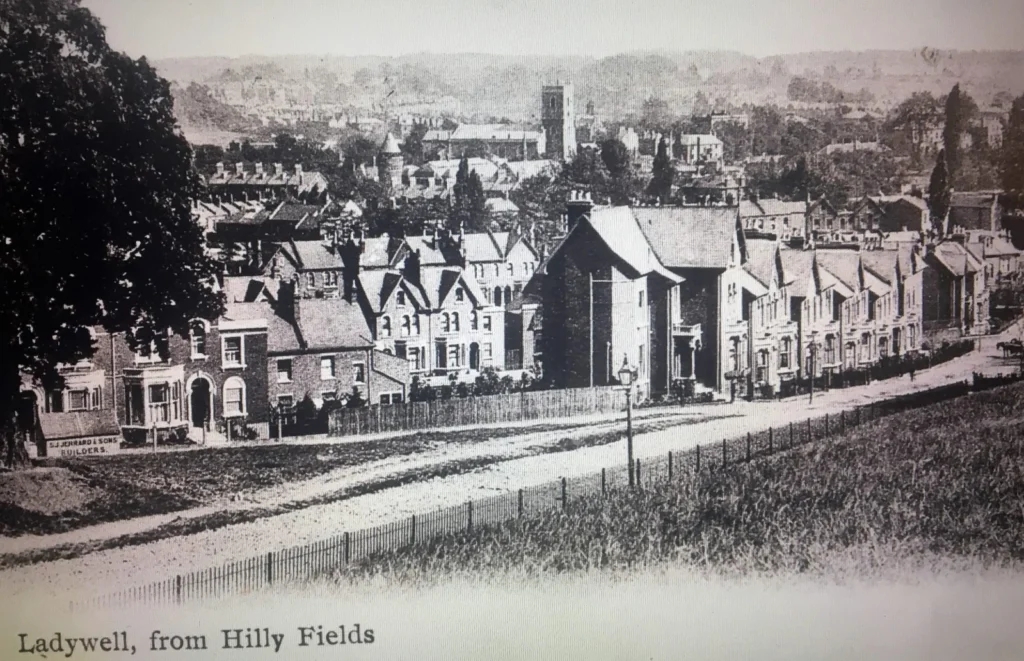
In Ladywell six people were killed in Algernon Road on July 7 when a V1 hit. On July 26-27, one of the worst nights for V1s in south London, Lewisham Hospital was hit. Two wards were destroyed, killing three people and injuring 70 patients and staff. Another hit Shell Road, killing six people.
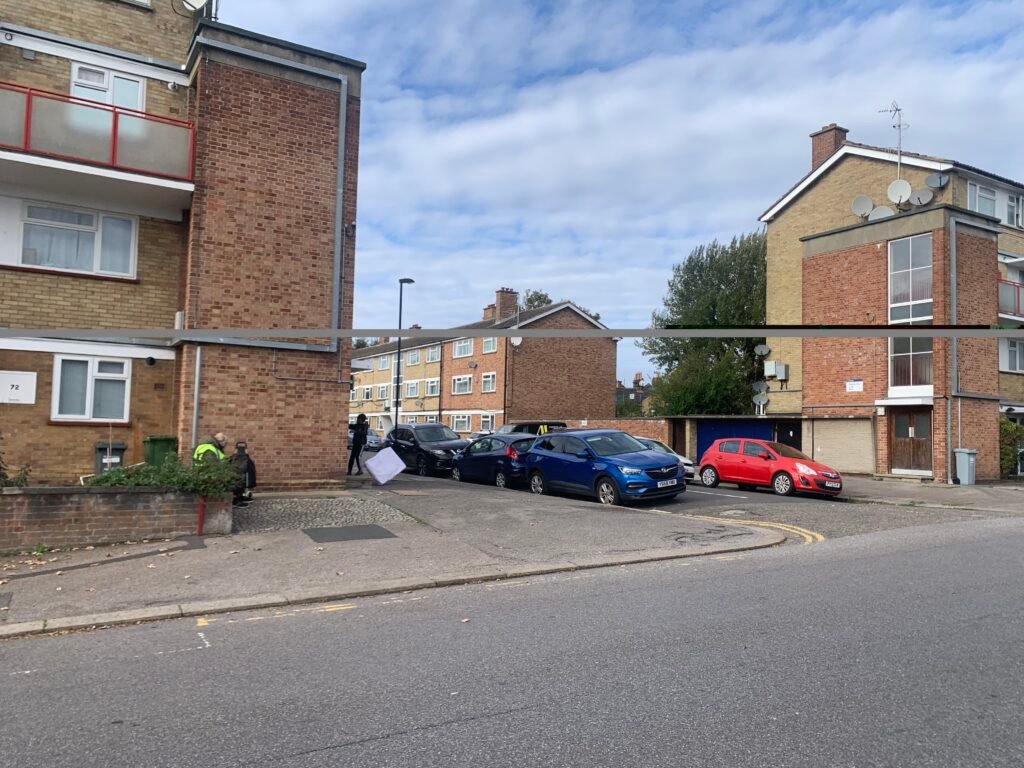
Ermine Road was also hit, killing one person and destroying a number of houses including the home of HE Olby (the Lewisham Builder’s Merchant). Several houses were destoyed on Ermine Rd. On July 27 V1s hit Shell Road and Nuding Road killing one person. It led to an etensive local authority post war housing infill.
On July 28 on of the worst V1 raids in London destroyed M&S and Woolworths in Lewisham, illing fifty one and injuring another two hundred and sixteen people.
This was the second direct hit on the high street. In 1940 the public air raid shelter on the corner of Albion Way took a direct hit from a bomb hit killing forty one people sheltering inside. A plaque commemorates the V1 strike outside the former M&S site in Lewisham High Street. On August 2, a second V1 hit Algernon Road killing two.
With the allied army liberating France and parts of southern Holland by the autumn of 1944, the V1 launch sites could no longer reach London. However the longer range V2 was now used to hit London. About 15 hit Lewisham. On September 17 a V2 hit Adelaide Avenue killing fifteen people including five members of the same family.
It wasn’t until March 1945, when the allied armies moved into northern Holland and crossed the Rhine into Germany, that the V2s finally stopped. A final airburst V2, was the last to hit Lewisham that month, although it caused no deaths and little damage.
By the end of WW2, 4,600 houses had been destroyed in Lewisham, with many more being damaged. About 68,000 people had been made homeless, 2,000 killed and 8,000 seriously injured.
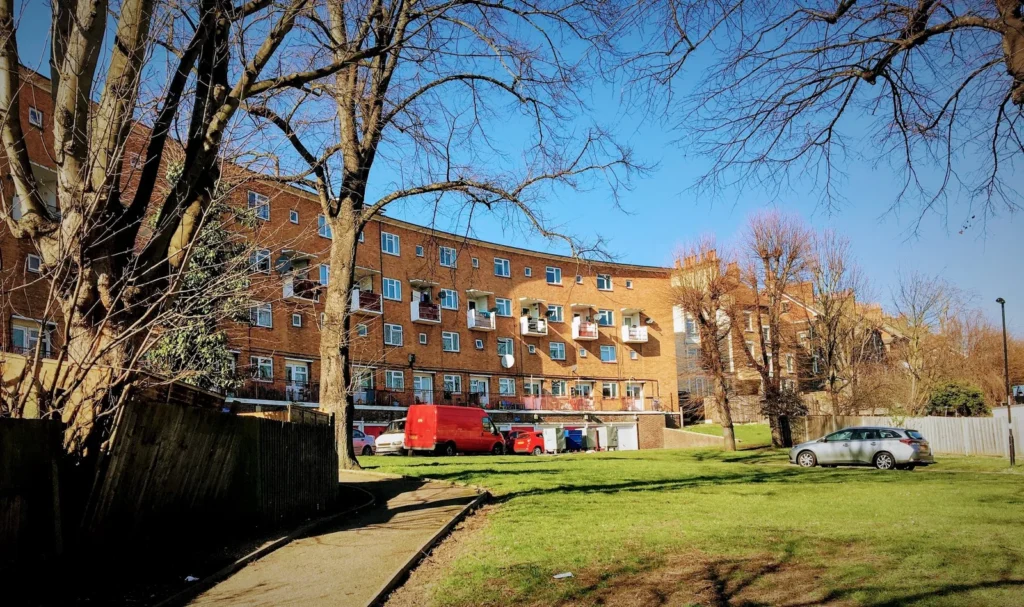
Nearly every school, church, shop, public building had been damaged or destroyed. This led to the juxtaposition of architectural styles that proliferate across the borough today.
This is most noticeable with the infill housing built by the public sector post war, with little regard for the previous streetscape.
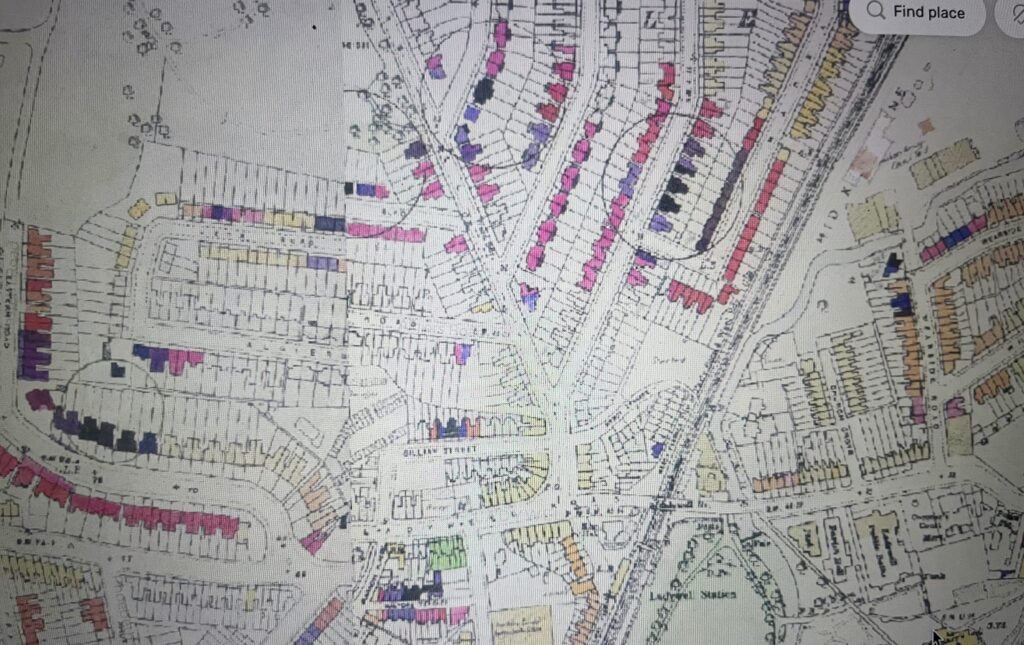
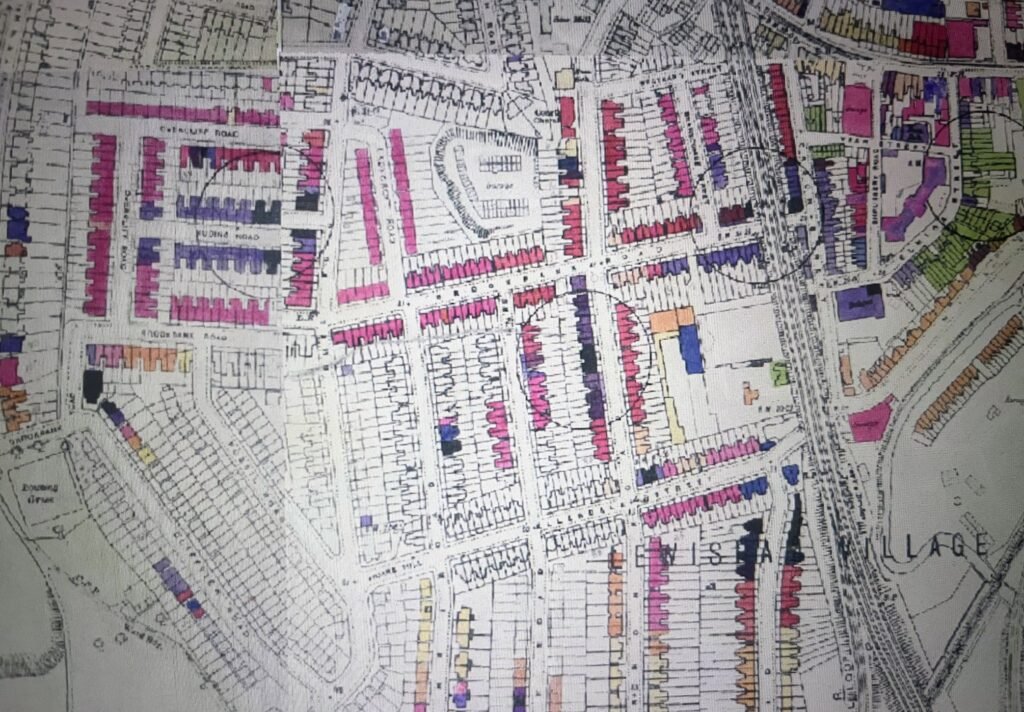
For those who might like to see how much damage their street suffered in WW2, you can zoom into street level on this website – the Layers of London website .
It provides an interactive bomb damage map of London. The map is colour-coded to show area of light damage (yellow/green) through to severe damage (red) and total destruction (black).
The map charts, house by house, the extent of the war damage, with categories ranging from buildings that were destroyed, to those that suffered minor loss such as broken windows.
The underlying map captures the capital before the post-war developments that gave rise to the modern city. It also depicts the locations where V1 (‘doodlebugs’) and V2 bombs fell.